This was my big moment. I would take a few steps forward, romantically descend down the stairs, and finally arrive in front of the girl I’d secretly been fond of for the past six months. Then, I would, gently, ask her out, which then I was pretty sure that she would answer “yes,” since her friends had already given me the cues. So, everything was set-and-awaiting for my moves. I took a deep breath, and tried to accomplish step one: taking the few steps. However, I realized that I couldn’t. My feet was stuck to the ground and refused to budge. My heart was pounding like a big bass drum, producing heartbeats so fast that my chest hurt and I felt as if I was going to suffocate. My different body parts disobeyed the orders of the brain, as if they were trying to dissent in one voice: “We can’t do this! We’re too scared!” I struggled to fight off their insubordination, repeating over and over again in my mind, “I’m not running away again! Move, you stupid feet! Move…!”
My story of this big moment all began when my friends suggested that I ask June-Jung, the girl in my class who I’d had a crush on, out on the night of the party we were planning to throw on the coming Friday. I rejected the idea at the spot, because I had been an average boy who was too timid to carry out such an extraordinary proposal. Some of you may wonder “what’s the big deal” about asking a girl out, but back then I was only 13, and in abstinent Korea asking somebody out was a big deal according to our social norms.
Nevertheless, my friends persistently persuaded me. They explained to me how that night was my perfect timing, needless to mention that it was my one and only chance, and so it was “now or never.” They also reminded me of the good chance I had of succeeding, since she was more intimate with me than anybody else in school. Nonetheless, I didn’t budge, and one of my annoyed friends complained, “C’mon, Hyung Seok! Are you going to chicken out again?”
His last words struck me really hard. Until that point, I knew I had run away from difficult, nervous moments in my life. When put up to challenging situations, I was afraid of nervousness I’d have to bear and the embarrassment of failure I’d have to face, so I chose to “chicken out” of events in which I had to deliver public speeches or ride the Gyro Drop in the Lotte Amusement Park. And yet, I had been considering myself as a person who knew the lesson of the saying, “Better to fail than to give up without trying.” I was abashed at both having been a coward all along and never realizing it. I decided to be a man.
But when I was put in the situation where I had to take “the few steps,” I was painfully regretting my bravado. Just around the corner, June-Jung would be waiting at the bottom of the staircase, having been told by my friends that this was some kind of event her secret Prince Charming had prepared for her. As helpers of my romance, my friends and her friends altogether would be surrounding her in a circle, waiting for me to appear at the top of the stairs. Therefore, I had to get down there; or else, I would face the utmost humiliation and misery of letting everybody, including myself, down.
However, the immeasurable pressure I’d put upon myself seemed to hold my feet back even more. About a million thoughts coursed through my head in less than a minute, which felt like about a hundred years. At last, I was exhausted due to the extreme nervousness, and finally gave up thinking. I stopped worrying about the hypothetical consequences of the actions that I didn’t even carry out yet.
Then I summoned all my courage, and commanded, for the last time, my feet to move. Surprisingly, this time, they obeyed. And after I took my first few steps, everything afterwards was so easy. My feet didn’t stop after they made their start, and they took me to my girl, whom I confidently asked out and who shyly answered, “Yes.” The entire process was as smooth as it was romantic.
From my big moment, I earned something more than just the heart of my love; I learned my “big lesson.” At the very instant when I was trembling with anxiety behind the staircase, assuming the worst of every possible scenario didn’t help me at all. Instead, when I emptied my mind and plucked out the courage to simply take the first few steps, I could achieve my goal. I learned that, to overcome difficulties, I only needed the “few steps of courage” to begin my challenge; after that, the remainder of the task could be easily completed.
So thereafter, I don’t avoid tough circumstances anymore; I confront them. When I have to make public speeches in front of a massive audience, or when I have to get on that Gyro Drop to plunge 78 meters, I think of my valuable lesson and tell myself, “Come on, just empty your mind and take the first few steps!” When I do exactly so, I am no longer scared. Then, believing in myself, I bravely march to the podium or to the horrendous vehicle.
And that has made a great difference.
This is my essay on the topic of "romance" in my 30 things. I intentionally left out any images or videos to preserve the authenticity of the essay.
2012년 3월 7일 수요일

2012년 3월 2일 금요일
Reading Journal on the "Outliers"

I’ve read up to the 10,000 Hour Rule in Malcolm Gladwell’s “Outliers,” and so far I find the book quite interesting. From the three stories I’ve read, the Roseto Mystery, The Matthew Effect, and the 10,000 Hour Rule, I could deduce a common theme Gladwell tried to demonstrate. “Success isn’t achieved; it is made.” In the “Outliers,” Gladwell acknowledged that extremely successful figures were all exceptionally gifted, but he also pointed out that it took them more than just talent for them to do so; they had to be in the perfect environment.
As I read along, I find myself persuaded by many of Gladwell’s explanations. Although many success folk legends narrate about determined, capable individuals who ardently worked to accomplish their goals, I tend to agree with Gladwell’s stance that passion and capacity alone doesn’t result in the upbringing of a great person. As he made it clear in the Roseto Mystery, people had to see beyond the individual if they wished to accurately identify the reason behind the unusually sound cardiac health of the town, or the “success of Roseto”; they had to take in consideration the environment, understand the cultural settings, and maybe even think about the geographical location residents were living in. Only then would the people be able to realize the incredible and extraordinary significance of such factors in life, or in outstanding achievements.
Gladwell then expands on his point in The Matthew Effect and the 10,000 Hour Rule by providing specific examples in real life. Through his discussion of the stories of the hockey players and renowned prodigies, Gladwell tries to demonstrate the enormous contributions opportunities and luck had made. At the first glance, Gladwell’s claims may seem outrageous; the excelling of many revered figures depended on luck! Who would believe that? Or furthermore, who would want to believe that? Sadly, anybody who has finished reading through the first two chapters of “Outliers” would be compelled to believe; junior hockey players born in January, February, and March who had maximum 10~11 more months of practice than their peers were usually the ones who became national superstars; programmers and musicians who had the “proper opportunities” to accumulate about 10,000 hours of practice were the ones who became historical legends. If one reads all the detailed analysis and practical data the author presented in the book, he or she must struggle greatly to dissent.
Obviously, I was, as always, the one of the majority, who couldn’t resist being interested in Gladwell’s ideas. I had always been a firm believer of the unlimited potentials of human willpower, and I considered the biographies I’d read about heroes, leaders, and all sorts of great people to be the evidences of my belief. However, it seems like the passion, talents, and adventures in the biographies weren’t all that was to their stories; timely chances and abundant fortunes were also important elements, in spite of the publics’ incessant efforts to disregard them (Nobody would like the explanation that you have to be lucky to become a true “Outlier”). As more interesting the contents of this book gets, I hope that Gladwell will further assist me to develop a holistic, authentic perspective about “success” in its future pages.
An Interview of Malcolm Gladwell on His Book "Outliers"
2011년 12월 20일 화요일
30 Short Things about Myself
30 brief statements:
I am a debater
I am a humanities field major
I wish to become an international lawyer in the future
I love cheese and Kimchi
I am a vocal at the school’s choir
I enjoy my life at KMLA
I want to travel to different countries
I like playing basketball
I wish I wasn’t solo on Christmas
I am not very comfortable with machines
I am very poor with saving money
I like hanging out with my friends
I like meeting new people
I enjoy exchanging ideas about various issues
I have resolute moral ideas on what can be done and what cannot be done
I support progressive tax
I am an atheist
I can sometimes be aggressive, but I try to control my temper
I consider myself as an amiable person
The best drama I ever watched was Boston Legal
My father is my life role-model
I believe conversation is the key to solving every problem
I believe proper conversation can take place when both parties are ready to talk
I believe trust is the most important quality in a human relationship
I’ve read approximately over 1500 comic books, and I have 676 volumes at my house
I’m addicted to 라면
I’m going to learn how to dance, how to cook Korean food, and Spanish after I graduate
I believe in true romance
I want to marry before I’m 30
I prioritize the people I care about more than anything in my life
2011년 11월 28일 월요일
2011년 11월 23일 수요일
The Eternal Fantasy under the Mask-Ode to the Movie "Phantom of the Opera (2004)"

Directed by Joel Schumacher, the film was also produced and co-written by Lloyd Webber. The Phantom of the Opera stars Gerard Butler in the title role, Emmy Rossum as Christine Daaé, as well as Patrick Wilson, Miranda Richardson, Minnie Driver and Jennifer Ellison.
THE PHANTOM OF THE OPERA: Movie Trailer. Watch more top selected videos about: Emmy Rossum, Gerard Butler
Phantom Of The Opera 2004 Movie Soundtrack from Jason on Vimeo.
Dear the Movie “Phantom of the Opera”

How is it even possible that you were created, you magmum opus? How is it that a masterpiece scenario met the greatest actors and singers of the time and made our dream come true? How could I be so fortunate to have the honor to encounter your magnificence? You are a true miracle. You are a true masterpiece. You are a true fantasy of all musicians and actors and directors and, mostly, of course, the viewers. You are the wonders of history; you are the legacy of the past, the present, and the future. I don’t deserve the desire to demonstrate your beauty or describe your details, but I would definitely delineate that your creation was a gift to mankind. Some would think that I am exaggerating: excessively exalting you by only emphasizing your good characteristics, but there are reasons why I euphorically eulogize my experience of you.


The first time I met one of your family members was at Broadway-did you know? I assume that even you aren’t really sure of who’s in your family tree and who’s not, since it has grown so big: from on-stage musicals to books, dramas, songs, and finally to you (movies). My first encounter with your gigantic family happened last year during the Vision Trip, with your great-great grandfather(musical). (Yes, the one who is the origin of your humongous family, the one who lies at the apex of the tree, and the one who’s now had been alive for several hundreds of years-that is who I am referring to.) I know, it’s a bit too late for someone who would like to claim that he possesses at least a sense of artistic appreciation; it’s embarrassing, I admit that. However, to tell you the truth, I was reluctant to further acquaint with anybody of your kind; I realize now that it’s foolish to make a hasty generalization of a whole species when I’d only met few of the members, but frankly, CATS was too unsatisfactory, too uninspiring, and too unimpressive! In fact, since CATS had disappointed me far too much before, I was expecting utter disappointment from your ancestor, too; my apologies.

However, instead, I found myself completely moved after watching the show. Your grandpa was my life-changing experience that inspired, uplifted, and enlightened my benighted heart. I felt utmost pleasure at the fantastic performance-the performers’ capacity to seize me and freely control my emotions at their will. I felt joy when the musical was joyous; I felt sorrow when the musical was to be sorrowful. All in all, I was fascinated by this new experience; your predecessor’s categorical charm chained me within his grasp, and I couldn’t break free from his lingering imagery even after many days had passed. They had completely “captured” me: the acts, the scenes, the songs-yes, the songs-left so much of an impression that my desire to feel the pleasure once again became so great.
When I had returned to Korea, my lust to experience the artistic ecstasy that I did with your grandfather once more had grown so large that I began “googling” your family history. Ah, and glory to the marvels of technology! After repeatedly failed attempts, I finally succeeded in acquiring you! We were meant to be, my dear, for I am downright positive that our destiny was pre-destined to overlap. Just when I was about to give up, over all the fabricated files and fragmented songs, I coincidentally discovered you-alas, it was serendipity! You wouldn't imagine how delighted I was when I had finally found you at the end of my long conquest.


And soon after, I clicked on your icon twice-the gateway that connected me with you, and I began watching you “perform” with my pounding heart. Do you remember how silent I was? Do you remember my astonished face, fascinated in awe when suddenly the chandelier illuminated and you played your theme song “Phantom of the Opera?” Boy, I was surely surprised back then; you were really something. I mean, I already presumed that you would be “something” since your origins themselves are noble to begin with, but what was truly amazing was that you were “something more” than even the show in Broadway. Your casting was perfect, your presentation was wonderful, your organization was splendid, your illustration was impressive, your transition was brilliant, your songs were unbelievable, your pace was marvelous, your powers were powerful, and you-were-impressive. My, my, am I making you too nervous? I hope you don’t interpret my exaltation as an attempt to flatter you. I was honestly, genuinely, touched-at-the heart by you; I can even now draw pictures of Christine Daae singing “Angel of Music” and “Think of me” or the Phantom singing the “Phantom of the Opera” and “Music of the Night” in my head. And when the songs were sung as a duo or a chorus, they were even better. The harmonious ensemble constituted of countless beautiful voices perpetually resonated in my heart. However, you couldn’t have become a living legend only because of the songs you sung; the way you delivered them, through sincerely immersed emotions and entangling them with a sad scenario, was another contributing factor to your everlasting fame in everyone’s minds-my mind. Your every line, every verse reflected ardent emotions, encompassing affection, care, fear, hatred, sorrow, yearning, disgust, haughtiness, and a variety of others. And due to such vivid portrayals of the feelings of characters, each and every one of the characters seemed “alive”; they each seemed to have possessed their own uniqueness, or conspicuous characteristics, which created liveliness and authenticity. Such verisimilitude is vital to absorb the audience, and that is what you contained to differentiate yourself from your rivals.
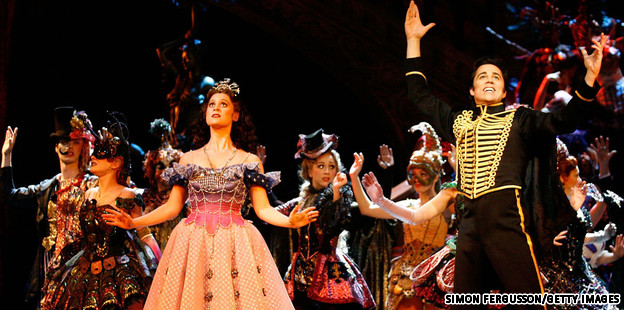


I could easily empathize with the Phantom’s grief, sorrow, fury, jealousy, distorted passion, desire to possess, twisted love; I was in Daae’s shoes when she felt the desire to meet the Phantom, the desire to become happy, the desire to escape from her fate and ordeals, and the desire to ask for guidance. You kept me focused, and I adore you for that.

However, despite all the aforementioned attractive features, your most valuable quality still remains; that is perpetuity. The fact that you are a movie, not a musical, is what makes you possess a historical value. Unlike the other members of your family, you last forever. I don’t know if I’ll be able to watch the musical “Phantom of the Opera” after 50 years; the show might not be popular enough to attract new viewers and disappear from the theater; even if it survives, the casting and performance would change over time, and we might not be able to feel the same astonishment, the same enthusiasm as we did years before. However, you-you are different. You will remain the same, preserving your glorious and enchanting old self, even if centuries are to pass by. You will maintain your powers forever, and I could rejoice being overwhelmed by your irresistible charms once again.


And this is why I praise you, oh Phantom of the Opera! That is why I chose you, over millions of other options, to dedicate this long ode to. And my admiration is unconditional. I ask of you nothing else than to remain as who you are in my C drive until the day comes we’ll have to part. I revere you, I worship you-you are my idol! I can’t imagine my daily routine without you know, for I will play you over and over again whenever that melody from the “Angel of Music” resounds inside my head. Even now, I am listening to your voice as I’m expressing my devotion towards you.
You are my legend. You are my Angel of Music. You are my guide and guardian (lyrics from the song). Grant to me your glory (also lyrics from the song), and let me resign in ecstasy eternally.

*And you, who is reading this ode; please, do allow yourself the opportunity to experience excessive pleasure-go watch the Phantom of the Opera.
2011년 11월 13일 일요일
Review Over The Excellent (?) Musical "The Last Empress"
Musical "The Last Empress"

The review and evaluation below were produced strictly based on my subjective standards.
Reputation ★★★★★

A masterpiece of an everlasting merit. Performed at Broadway and lauded by the Broadway critics. The pride of Korean musicals. These were the appreciations I had heard of the musical “The Last Empress”. So therefore, these were the similar assessments I was hoping to make myself about the musical when I had visited the Choong-Moo Art Hall with my two friends on the 12th of November, the precious golden peak of my weekend. Unfortunately, the only impression I had received from the 150 minutes of the lengthy performance was how distant the quality of Korean musicals were from reaching the levels of that of globally renowned musicals.
Expectations ★★★★★

At first, everything seemed to go pretty well: after we (me and my friends) had eaten pasta at a nearby famous restaurant which we had “googled” on the internet beforehand, we arrived just in time when the theatre was about to lock its doors. We sat down at the third row from the front, which had cost us fairly a large amount (85,000 won), with our hearts filled with grand expectations and nervous excitements. We were all hoping to see an outstanding show, perhaps not like the historically epoch-making Phantom of the Opera, but at least possessing the grandeur and scale that it ought to have considering its superb price of fame. And until the curtain was finally lifted and several musical performers appeared on stage wearing awkward Japanese samurai costumes, our sense of excitement remained.
Language Transformation ★★

However, when the show had begun, I noticed that something was…… unnatural. Surprisingly, it wasn’t just me who’d felt that way; all three of us simultaneously stirred at the “uncomfortable”-yes, that would be the correct modifier-song the samurais sang. A few seconds later, I finally understood the cause for my uneasiness; the words in Korean were being squashed into the musical rhymes, and it was hard to distinguish whether the performers were singing a song or engaging in a dialogue. It was rather odd; something wasn’t really right, when Korean was being transferred into musical lyrics, the connection wasn’t as smooth when English had. Our stereotypes that musicals should be performed in English might have played a role in generating the uneasy sentiment, but the lack of professional skills make the transition natural was also a definite factor. Somehow, the actors skillfully managed to continue, but even they couldn’t assist us in eliminating the awkward sentiment we felt due to the “forced translation” between two different languages. Such impressions made us feel……exhausted: we felt as if the singers were laboriously reciting their sentences, with great effort and ardor but without confidence.
However, despite our discomfort towards the awkward transformation, the performance continued. Thankfully, after awhile, we managed to withstand the choppy dialogues (or songs) as we eventually got used to them. So then, we quietly watched the show, waiting for the performers to impress us-to sway our emotions dexterously, manipulating us to be surprised, be enraged, be sympathetic, be nostalgic, and be sorrowful so that we had to cry out loud. Our anticipations were still very high; we were so sure that we would soon witness the source of this musical’s popularity.
The first half of the performance had ended.
We still weren’t sure why so many people had exalted this piece.

Content ★★★
Performance ★★★
Impact ★★
Presentation of Scenario ★★
Settings ★★★


The overall quality of the work was reasonable. The scenario was based on a historical event, thus the story pretty much stuck with the facts. The characters, similarly, resembled the actual figures. The singing and dancing were well practiced by the performers-by 대원군, 홍계훈, 미우라, 고종, and 명성황후, we could notice-and was put on stage without critical mistakes. Conclusively, the general content of the show had well reflected the historical incident to some degree, and the “artistic elements” of the show (singing and dancing) delivered the scenario reasonably. However, as you might have noticed from the tone of my demonstration, everything was reasonable; there wasn’t a single part in the piece where it was strikingly impressive or a single song which was euphonious and beautiful for us to remember forever. Nothing was resonating in our mind when the first half had ended.
Emotional Absorption ★
So, we expected for all the surprises and sensations in the next half. We at least had hoped to hear the historically famous quote “I am the mother of this nation” at the climax, when the empress was murdered.
Disappointingly, our poor empress encountered her tragic fate abruptly, and passed away without much drama.
The latter part had finished.


And we were just all so confused! We were thinking, “Did we miss something?” “Why is it already over?” “THAT’S IT?”We were mad, we were disappointed, and again, we were confused over what was supposed to be so impressive about what we'd just watched. The first thought that came into my mind as I was walking out of the theater: “That show is so mediocre!” The show wasn’t terrible, but it wasn’t good either! And, of course, it wasn’t impressively fantastic, at least not enough for it to be named the “A masterpiece of an everlasting merit” or “The pride of Korean musicals.” Where did these evaluations even come from? Where were all the lauded drama and the excessive flow of emotions-the fury, the sorrow, the empathy-that the critics of Broadway had experienced?

As we were exiting through the door, we heard someone say, “I enjoyed the show, but I couldn’t find a reason to revere it. I mean, I couldn’t find something specifically to criticize, but I couldn’t find something to craze about either.”
Mediocrity ★★★★★
Disappointment ★★★★
And that’s exactly my point.
Cost-Benefit Analysis ★★★

Did I tell you that this show cost me 85$? Well, luckily, I don’t regret spending the money. Although I did waste a crucial part of my weekend along with my month’s allowance, I could say that I paid off the performers who must have practiced really hard for this show, and who exactly aren't responsible for the banality and idleness of the show. And it didn’t suck, either, so, I’ll consider it to be the one and only annual investment I’ll make for my cultural life. Besides, I also learned two important lessons from this experience. Number one: don’t blindly trust the reputation, even if authorities with expertise had given them so; sometimes, you just can’t understand their standards. And number two: Korean musicals still have a long way to go in their path.
And my advice for you: don’t go watch “The Last Empress.”
Satisfaction ★★
My Recommendation ★
Part of the Musical that are interesting to watch:
http://www.pandora.tv/category.ptv/video/category/c1/01/c2/0097/ch_userid/barrim/prgid/34270579 "수태굿"
Music Video from Another Movie:
http://blog.naver.com/axisinc?Redirect=Log&logNo=30113366398&jumpingVid=F81A318F57E386813FB85508428F425CE66C
2011년 11월 6일 일요일
In Class Reflective Writing
How do we understand the value of life? Everybody so plainly, easily says that life is sacred; but how are we supposed to really "grasp" its importance when the concept itself is so broad and abstract? Sure, we breathe, we eat, we sleep, we walk, and thus, we live, but the "gravity" of life and death cannot be educated to the same group that simply. The answer is simple: we simply have to encounter death in order to truly understand what life is and how much importance it bears.
Although the idea of interpreting "life" through "death" seems a little ironic, it is the truth. People "feel" life only when they have witnessed the breaths of their beloved ones gradually fading away. They understand the immeasurable amount of value life embraces only after they have experienced the mournful sorrows of the deceased's relatives, or, possibly, their own's. The elder monk employed this exact method to enlighten his young pupil of the severity of his actions. The child could realize how malignant and atrocious his acts had been to other "lives" through his first-hand experience of the same ordeal and furthermore, the death of his victims. Just like the old sayings, experiencing was again, the best means of learning, even in such fundamental matters such as death.
As for myself, I'd witnessed the death of a person twice, both of them being my friend's parents. The only reason I can be confident in writing this reflection is because my belief roots from my personal experience. Tragically, both cases were the cases of the friends here, at KMLA, and I'd attended the funerals both times to console my friends. I wouldn't want to elaborate on the details once again, but I must say that the loss is nothing I could have imagined or evaluated until the very moment-when I saw the portrait of the deceased, bowed, turned around and saw the sullen eyes of my friend. For a second, I thought the eyes in the portrait were literally looking at me, full of sorrow and sadness, and I froze; I felt something unimaginably heavy and painful weighing down on my chest. If someone actually had had a similar experience, he or she would understand what I'm talking about. That was when I genuinely understood the gravity of death, and paradoxically, the gravity of life as well. I "felt" how meaningful the person on the picture had been to his friends and families. I "felt" how valuable and meaningful his life had been, by itself and to the world.
In spite of our government's enthusiastic campaigns preaching about the value of life, suicide rates in our country keep going up and up. Numerous people choose to give their lives up because they think their life is so miserable and unbearable; they think nothing could be worse than their lives themselves. However, there is, and it's called "death". Most of those who intentionally give up their right to live underestimate their desire to live. They underestimate the intrinsic value their every living moments contain. According to an interesting research, over 90% of the people who had attempted to commit suicide but miraculously had survived admitted they had regretted their decision when they were about to face death. So, maybe this result suggests how we can curb suicide after teachers, parents, friends, professionals, and even our national government had vigorously tried but failed to do so. "The encounter of death"-that is what would, once again ironically, make the people who are about to jump off their apartments reconsider their reckless decisions. Since the "lack" of something is what most effectively teaches its importance, people would learn to value their lives-or every life-when they had faced death and its excruciating brutality. Remember the painful outcries of our repenting young monk.
I've learned how thankful I am to be alive through their (friend's parents') lessons.
Requiescat in pace. May the deposed rest in peace.
피드 구독하기:
글 (Atom)