2012년 11월 7일 수요일

Moment of Reflection - After Watching "Ben X"


For me, the single most memorable scene in the movie Ben X was when the bullying video was shown on screen during Ben’s funeral. It wasn’t memorable because it was cathartic to see the good finally pay back and the evil repent, but rather because the scene itself felt so… ironic to me. Clearly, the original intention of the movie was to illustrate the moment in which the evil bullies are humiliated in front of the still-alive public conscience. But instead of feeling gratified, I felt uneasy. I was constantly repeating the same question inside my head: “What would I have done had I been Ben’s classmate?”
             
              For the record, I’m against bullying in any way, shape, or form. Although I’ve never been bullied, I, too, went through a period of social isolation. When I moved to the States at the age of 9, I experienced what it’s like to be left out just because “I was different.” I understand just enough - from the victim’s perspective - how terrible it can be to be bullied, harassed, and isolated. Therefore, I abhor anyone who bullies other people altogether.

              But can I say that I’ve always acted upon my beliefs? Have I actively fought against an act that I detest so much? Have I reached out to victims like Ben? Have I never hurt anyone’s feelings by “teasing” him or her? Has my “teasing” never crossed the line that, sometimes, it approached the standards of bullying? I’d certainly like to say “yes” to all questions. But what I want to believe and what actually is the truth is different. Maybe, if I were put in a situation in which another Ben was being harassed by a group of people, I might have looked away. This doubt is what constantly made me uneasy.
             
             Then, I ask the same questions to the crowd who are glaring at the bullies in the video with disgust and contempt. Would you have helped Ben if you had been in that classroom? Are you sure you wouldn’t have joined the students jeering at Ben? I can imagine hearing angry responses. What? Are you kidding me? Of course I would have helped Ben! I’m “different!”

However, the truth is that nobody says out loud that he or she is a bully. In fact, when we’re watching the film, we all consider ourselves to be absolutely moral and warmhearted. We despise the bullies, condemn the ones who join the bullying act or simply sit back and watch, and root for Ben inside our minds. But honestly, have we never seen a Ben in our lives? Hands on our hearts, can we really say that we’ve never ignored him or even took part in the awful act?
             
             When I think of how many people in that church would have actually acted differently in the video’s situation, the final scene seems ironic. To me, the juxtaposition of the ashamed perpetrators and the furious audience is rather comical. Had the situation been different, the two groups might have switched places. Everyone, including the people who claim to be ethical, has the potential to become a spectator if not a bully. Then, I ask again, are you really “different?”
             
             After watching that last scene in Ben X, I am together ashamed with the bullies. I quietly swear to myself that I’m going to try harder to live up to my beliefs - that I’m going to be different from the ones who didn’t help Ben.
             
             What about you?

2012년 6월 13일 수요일

After reading "Ethnic Theories of Plane Crashes"


           Reading this chapter was a painful wake-up call. When Gladwell first mentioned the failures of Korean Airlines, my patriotic sentiments were ready to be offended and to rebut to whatever he had to mock about my country. However, as I read through his detailed, step-by-step analysis of attributing plane crashes to the cultural aspects of the Korean people, I had to recognize what Gladwell had brought up was, largely, true. We Koreans are educated and trained from birth to be respectful to authority. The acceptance of hierarchy is embedded throughout our entire nation, and those who are at the lower level of the pyramid are expected and demanded to be subservient to their superiors; whether it’s children to their parents, employees to their employers, or just the young people to their elders. And this tendency doesn’t exist only in Korea, but in the Oriental World as a whole. Many countries that belong to the Eastern Cultural Region rank at the top of Power Distance Index scale, which means that people from this region generally don’t challenge the ones in power.
                  Sometimes, this sort of paying-deference-to-authority identity, or the deep-rooted culture that formed the identity, can be viewed as “beautiful.” That’s the expression Gladwell uses to describe the excerpt of a typical Korean dialogue between individuals in different power ranks; he says that the subtlety is courteous and beautiful. However, I agree with Gladwell that in certain circumstances, such subtlety is unnecessary or even dangerous. The kind of conversation that Mr. Kim and his 과장 had after work shouldn’t take place in a cockpit of a plane that is facing bad weather conditions, technical malfunctions, and especially severe lack of fuel. If the person in charge, the captain in the cockpit, is fatigued and unable to make reasonable decisions, whoever can take over should take over, particularly since hundreds of lives are at stake. But maneuvering airplanes isn’t the only task that involves human lives or other valuable resources; driving buses or subways, rescuing people from emergencies or disasters, investigating and tracking down criminals, importing merchandise, exporting merchandise, or any other possible job you can imagine of is responsible for perhaps the countless livelihoods, or actual lives, of people. Therefore, given the detrimental consequences of failures of each and every one of these tasks, the agents of these tasks should primarily focus on maximizing efficiency and minimizing the risk of failure. Ironclad hierarchies are hardly an effective method to achieve that goal.
                  And that’s why I believe traditions and customs that demand “respect” to subordinates do more harm than good, almost in every case. Although I understand such cultures have their own merit, in a rapidly globalizing world like ours, respect is considered to be something that should be “earned;” not “demanded.” Free exchange of ideas, open minded discussions, diversity, and horizontal bureaucracies are what define and innovate today’s world, and customs that hinder these ideals could be evaluated as “obsolete.” Especially if someone is in a situation in which he or she is responsible for other’s lives, cultural legacies cannot be an excuse for a mistake. Whether you are a Colombian, South Korean, or a member of any other ethnicity, you cannot be absolved for crashing a plane. Maybe this is why we Koreans should also start to liberate ourselves from the tradition that values unconditional obedience. That’s what I firmly believe in, at least.
                  However, I also understand that changing is difficult. Until I read this chapter, I thought I was irrelevant with the Korean norms of submitting to authority. However, when I read the excerpt of Mr. Kim and his 과장- I imagined myself being put in a similar situation and contemplated how I would have reacted in such circumstances. The answer was painfully clear: I would have behaved the same way Mr. Kim or his 과장 did, and never even think once I was epitomizing our subtle culture. Moreover, all the customs that Gladwell discussed-standing up when a senior enters a room, using deferential language to superiors, or waiting until the oldest person lifts his or her spoon at the dinner table-were natural courtesies that I followed in my everyday lives! I was shocked. Not because I thought our traditions were some useless crap, but because I recognized how deeply permeated our culture was within our thoughts, habits, actions, and lives. How could I request other people to change, when I myself was being heavily influenced by culture?
                  Nevertheless, despite the difficulties, I believe changing is possible. The example of Korean Airline demonstrates how change of cultural viewpoint was tricky but possible, and also worthy. Worthy enough to transform an airline that had 17 times more accidents than American airlines to one of the safest and renowned airlines in the world, and worthy enough to earn the firm a Phoenix Award in 2006 and make its record spotless since 1999. I won’t say that change is always better, but definitely in some places, change is needed. And the cockpit of a plane is just one example; who knows in this vast new world how many more places require openness, flexibility, and horizontal relationships instead of hierarchies. As it is becoming more important in various occasions for every single member of a group to speak up, the need for Korea to adapt to different cultural values is increasing. So let’s change; if Korean Airlines can do it, so can we.

2012년 5월 2일 수요일

After Reading "Harlan, Kentucky"


             Who are we? We are what we are. We are defined by where we are from, who we grew up with, and even when we were born. In the 6th chapter of the Outliers, Gladwell explains such factors can help determine “why” we make certain decisions. According to Gladwell, these “cultural legacies,” or the influences of the environments we originated from, become a part of our identity. For instance, American Southerners, especially borderland residents who used to be herdsmen, react much more aggressively compared to Northerners when they are insulted. Why is this so? The book suggests it may be because herdsmen had to be more petulant to protect their stocks than farmers who only had to raise crops. The ancestral roots of these people had survived for centuries to shape the personalities of the descendants. For inhabitants of Harlan, Kentucky, perhaps their roots that valued the “Culture of Honor” were what caused so many feuds between families.
             What I found interesting in this chapter was the great power “culture” had among its people. When we evaluate ourselves, we usually consider us to be intellectual beings exercising free will. We believe that what we choose to do, from picking a cheeseburger over noodles at lunch to enrolling in college instead of advancing to the job market, is primarily dependent on our own mind and its process of thinking. However, after reading this chapter, no fool could claim the Howards’ and the Turners’ “decisions” to shoot each other down was the sole product of their free will. Or, even if it is, that “free will” could have been formed and amended by the constant influence of its surrounding environment; in other words, its culture. The rationale that we humans believe to be so ultimate and flawless is actually, much more fragile: it is easily transfigured by the discipline of our parents, underlying violent heritages, and many other cultural factors.
             Our lesson from this chapter could be applied in reflecting upon another intriguing topic: “Cultural Relativism.” Basically, the concept means that the ideas and habits of each and every culture should be respected equally. Having grown up and been educated from a predominantly Western culture (at least, from my perspective, I’d say Korea’s pretty Westernized), I used to think “Honor Killing” or “Cannibalism” existing in faraway, remote cultures were barbaric. Basing my thoughts on the UN Human Rights Charter or our “common sense,” I argued the constituents of such cultures should be ashamed. But as I pondered more about the topic, I began to question, “Is there any value that is universal or absolute?” Back in the Chosun Dynasty, people valued honor or loyalty over their life. To them, it was justified to kill a person to protect their honor or loyalty to the king. As we’ve read from the book, the jury of the South also thought it just to kill one’s insulter. Then, who can we throw the stone at, based on what standards and judgments? In esoteric cultures, is the peoples’ “perception” wrong because it’s different from ours? Such notion would be bigotry, since we too used to justify slavery with our own convenient set of value systems. If we were to travel back a few hundred years, we’d be the “Alices in Wonderland” who couldn’t adapt to the way of living. Traveling to a different culture might be just the same thing.
             So then, how can we even make evaluations or judgments about what is right and wrong, good or bad? Every event could be the outcome of different values from diverse cultures. This is the question I’ve had for years, and I still haven’t found the answer yet. I guess there’s still a lot more to learn and contemplate about. What is your opinion?

2012년 4월 22일 일요일

2012년 4월 7일 토요일

Who I Am

“Who am I?” The question popped up in my head when I was trying to write yet another college essay. It was past midnight, all the lights had been turned out, and only the soft snoring of my roommate filled the room. I had been sitting in front of the monitor for almost two hours, to draft the 10th, or maybe the 100th version of my college essay that was supposed to be touching and humorous and insightful at the same time, or in other words perfect to guarantee my admission to a top university.

My peers had written remarkable essays about the sorrow they felt towards an AIDS patient they met during voluntary service at a hospital, or the insight they gained from experimenting the “Fluid Bridge” while competing in the Korean Young Physicists’ Tournament, or the pleasure they’d felt while they were conducting the school orchestra on Beethoven’s Symphony No.9. I envied them. Their essays were so outstanding that whoever read them was moved, impressed, and forced to like the personalities of the writers. All their stories seemed to have their own unique colors, just like an ideal college essay.

On the other hand, mine didn’t make its readers laugh or cry with it. After reading some of the best essays written by students from our prestigious high school, I was anxious to “produce” something that was more than, or at least as impressive as, my friends’. I tried to decorate my life with the colors similar to those of my peers’, hoping to astonish my friends as their essays had done to me. But no matter how much effort I put into imitate others, no matter how hard I tried to invent an authentic feeling for AIDS patients or to imagine the ecstasy of conducting physical experiments or orchestras, my essays didn’t show who I was. I would always get the same response, “Hmm…the essay doesn’t really…come to me.”

That’s how I flunked the previous 9, or perhaps 99 versions. It was past midnight, and I was tired, frustrated, and running short of colors to plagiarize from. Then for the first time, ironically, the most fundamental and important question popped up in my head, “Who am I, really?”

The answer was here, all along. I am me. I don’t know a terminal AIDS patient, and I’m not a physicist or a conductor. I am someone who was unable to write a successful college essay, but nevertheless didn’t give up and is trying for his 100th time in spite of the immense fatigue and frustration he feels for sitting alone in his dark, lonely room. This was the attitude I’d adopted all along in parliamentary debates I did instead of physics; in singing at festivals instead of leading an orchestra. I am someone who was jealous of others for their talents, for their dazzling achievements, and who strived to be magnificent like them. That was the passionate personality that enabled me to claim first class-honors and receive merit scholarships.

I didn’t have to create an “artificial me,” an imaginary physicist or conductor, but to just honestly show myself: a good debater, a decent singer, and an excelling student. I didn’t have to be someone else. I should have been proud of my own colors and painted my essays with them, which I am doing right now.

And even if this 100th version still doesn’t come to the readers, I know I’ll be sitting back at my chair to draft the 101th. The relentless ardor, the jealousy generated from a sense of inferiority, the desire towards perfection motivated by that jealousy, the fatigue and frustration I’m feeling at the moment, and the confidence I’ve restored in myself as I’m finishing this essay.

This is who I am.

2012년 4월 6일 금요일

Why Penn

Why Penn Prompt: 'Considering both the specific undergraduate school to which you are applying and the unique aspects of the University of Pennsylvania, what do you hope to learn from and contribute to the Penn community? (Please answer in one page, approximately 500 words)

When I was young, I used to aspire after my father, as boys usually do in their childhoods. My father was a university professor at Public Health Policy and Management, but I wasn’t old enough to fully understand what his profession was about, so I comprehended it as something similar to medical science. Therefore, when he had answers to my questions on the political scandals of the Korean President and his private business, or to the scientific debates on the intensifying global warming, I was astonished.

So one day, I asked him, “Dad, how do you know about all these different stuff? Aren’t you someone like…a doctor?” That was when he explained to me that his job wasn’t related to medical practice, but it was to setting the blueprints of Korea’s public healthcare policies. When I asked him what that had to do with knowing things about engineering or biochemistry or economics or contemporary issues, he replied, “If you want to propose a healthcare policy, you have to be more than just a doctor. You have to possess a certain degree of knowledge about medical science. You have to understand the economic and political factors involved with your proposal.” And then with a smile, he added, “But it isn’t just my work that requires comprehensive knowledge, Hyung Seok. Whatever you do in the future, it is important for you to try to understand multiple different aspects of the world, because it will eventually help you in many ways. If you want to become a big person, you have to grasp the big picture of the society.”

Growing up, I heeded his advice, trying to diversify my interests in numerous subjects. Apart from political science or history, my personal favorites, I tried to devote myself to mathematics and science too, my least favorites. And although I wasn’t good at everything I tried, I could prove my father’s beliefs true: knowing about the biomedical causes of the mad cow disease helped me deeply engage in class debates; understanding the economic concepts of supply and demand furthered my interpretation of the Great Depression or the Sub-Prime Mortgage Crisis. Then, comprehensive knowledge in different areas led to a more profound understanding in each of them, and profundity to insight. Dispersing my interests really did help me to become a much better person.

This is the reason I believe the Interdisciplinary Dual Degree and Minors Programs in University of Pennsylvania would be my perfect fits. Unlike many other institutions, U.Penn encourages me to explore a variety of academic possibilities, which I’m confident that I would like and excel at. Whether it’s learning about Business Management in Wharton, Asian American Studies in School of Arts&Science, or even Urban Real Estate and Development as a minor course, I believe they will all contribute to my improvement as a person. Conversely, my insatiable greed towards studying different subjects would also contribute to the all-around development of the Penn community. If this university shares similar ideas with my father, and wished to tell its pupils “Don’t be confined to a single major; it’s just one small part of the big picture,” I am its model applicant.

2012년 4월 4일 수요일

“Don’t cry.” I order myself. “I shouldn’t cry.” I assure again. But whenever I watch the terminally ill patient in “My Love beside Me” say his final goodbyes to his lover, or Alan Shore deliver his heartfelt speech in “Boston Legal,” or the fringe ski-jump national representative team claim its championship through painful endeavors in the 2007 Torino Olympics, I am unable to hold back my tears, again. Every time after I shed my tears, I become abashed at my namby-pambyism, but I can’t help it; I’m just moved too easily by heart-moving stories.

Like many other countries, Korea had a taboo against boys crying. There is an old Korean saying, “A boy is allowed to cry just three times in life. When he is born, when his mother passes away, and when his country perishes.” As ridiculous as it sounds, the three-time crying idea represented the deep-rooted and popular bias against boys, and “crying” in times other than the three was considered unmanly, or even deserving mockery.

Yet, despite being born with Korean blood, I cried a lot more than my allowed three chances. And yes, sometimes I cried because I had broken a bone or two, but most of times there was something more than physical pain behind my tears. It was this inexplicable sense of overwhelming that always made me cry. Sometimes it was sympathy, and sometimes it was extreme happiness; however, no matter in which shape or form it came, such overwhelming always brought a certain sort of awe and admiration along with it. The unconditional love between the soon-to-be-dead and his lover in “My Love beside Me,” or the profundity or genuineness of Alan’s speech in “Boston Legal,” or the perseverance of the team members in the Torino Olympics all stirred up a sense of marvel inside me. I was impressed by such people, fictional or nonfictional, because they displayed great qualities that could move the human heart, such as sacrifice, honesty, and strenuous efforts.

And slowly, impression triggered imitation. Whenever I encountered some great challenge or was discouraged by some terrible source of fear and sorrow, I would substitute myself with that Alan Shore or the Olympic Gold Medalist and urge myself to do what they would have done. When it was my turn to make a speech in the grand finals of a debate championship, I would tell myself, “Would Alan, the greatest attorney in America, ever be afraid to deliver a speech in front of a little pack of audience?” After I concluded the answer is, of course, no, I bravely marched to the podium. Or, when I was afraid that I would screw up my last shot in a basketball game, I would think, “I’m the hero of this game; I’m the gold medalist in Torino!” Unfortunately, a lot of speeches I gave were lousy, and even more shoots bounced off the rims. Nonetheless, it was the successful rest that mattered to me: some of the speeches were exceptional, and few of my last-minute shoots were the buzzer-beaters of the game. Then sometimes, my achievements would present that particular sense of overwhelming, and I would cry. The tears I shed were tears of immeasurable joy and happiness, and they were rapturous enough to make me ignore the embarrassment that would eventually come.

Everybody has his or her own secret pleasure in life, something that replenishes the vitality worn off from daily boredoms and becomes the motivation to try harder. For me, that pleasure is the ecstasy I can feel only when I am overwhelmed by myself; maybe because I’m truly proud of what I’ve accomplished or grateful for what I could do. Often, when I tried to pursue my secret delight, I had to pluck up the courage to confront challenges and make sacrifices, imagining what my personal heroes would have done in my situation. And that has made a great difference, allowing me to rise up as the national debate champion, a decent basketball player, and a much better person.

And now, recognizing what crying has brought into my life, I am thankful of the moments when I had burst into tears. The taboo still exists in my country, but I am no longer ashamed. In fact, I love to cry now, especially when I am proudly overwhelmed with my life. Some might say, “You’re too weak.” Too weak? Well, I am weak to my sort of stuff, but I’m glad that I am, because that wanting to cry has made me much stronger in many ways.

2012년 3월 28일 수요일

Life in KMLA

Life in KMLA is that of a mayfly’s, trying to fly high from bright to night.

Every day,
We hatch our beds and match our clothes,
Snatch our breakfasts and catch our classes,
Botch our quizzes and watch our presentations,
Crouch down to sleep whenever we can,
Touch-down back to our dorms,
Bleach ourselves with homework to become the top-
Notch students, or batch of zombies.

Exhausted, we stretch ourselves and fetch our pajamas,
Relieved that we survived yet another mayfly’s day.

Lying down in bed, we recollect,
Jokes we exchanged with friends,
Chicken legs we ate in rooms,
Business plans we turned in at the last minute,
Which become the smiles in our faces,
and the hopes for prospects of another mayfly’s day.
“Don’t cry.” I order myself. “I shouldn’t cry.” I assure again. But whenever I watch the terminally ill patient in “My Love beside Me” say his final goodbyes to his lover, or Alan Shore deliver his heartfelt speech in “Boston Legal,” or the fringe national representative team claim its championship through painful endeavors in “National Representative,” I am unable to hold back my tears, again. Every time after I shed my tears, I become abashed at my namby-pambyism, but I can’t help it; I’m just moved too easily by heart-moving stories.

Like many other countries, Korea had a taboo against boys crying. There is an old Korean saying, “A boy is allowed to cry just three times in life. When he is born, when his mother passes away, and when his country perishes.” As ridiculous as it sounds, the three-time crying idea represented the deep-rooted and popular bias against boys, and “crying” in times other than the three was considered unmanly, or even deserving mockery.

Yet, despite being born with Korean blood, I cried a lot more than my allowed three chances. And yes, sometimes I cried because I had broken a bone or two, but most of times there was something more than physical pain behind my tears. It was this inexplicable sense of overwhelming that always made me cry. Sometimes it was sympathy, and sometimes it was extreme happiness; however, no matter in which shape or form it came, such overwhelming always brought a certain sort of awe and admiration along with it. The unconditional love between the soon-to-be-dead and his lover in “My Love beside Me,” or the profundity or genuineness of Alan’s speech in “Boston Legal,” or the perseverance of the team members in the Torino Olympics all stirred up a sense of marvel inside me. I was impressed by such people, fictional or nonfictional, because they displayed great qualities that could move the human heart-by sacrifice, by honesty, and by strenuous efforts.

2012년 3월 14일 수요일

Fear of Solitude

In the dark, lonely cell, the figures of two men were barely visible. One of them was lying down, and the other was by his side, holding the failing hand of his friend.

“Hey, feel any better? Just hang in there, you’ll be alright.”
“What…time…is it now?”
“Hell, it must be far past midnight, looking at you sleeping for hours!”

But he wasn’t quite sure, either. Nobody knew what time it was. Actually, both of them didn’t know where they were, how long they had been locked up, and why they were detained. However, such things didn’t matter much anymore. Not only was there no way to find such stuff out, there was a far more pressing concern to the man keeping vigil by the patient. His friend was seriously ill, and the man was about to be left all alone.

“Hey, how are you feeling? We’ll get out of here soon. Just hang in there.”
“…I’m…ready…to go…”
“What the hell are you talking about? You’re not leaving me here, all by myself!”
“I’m sorry…”
“Then don’t be, goddam it! You’ll be alright, ok? Just hang in there.”
“I really am…I’m sorry…”
“Oh for heaven’s sake! You’re not going anywhere, so you don’t have to be sorry. Just keep talking!”

The patient’s hand, which had been holding onto the grip of his friend’s with its last strength, fell to the ground. Suddenly, an unfathomable fear overwhelmed the man left on earth.

“Hey…don’t kid with me! Just hang in there, ok?”
No response.
“C’mon, talk to me. Now you won’t even talk to your closest friend?
No response.
“Hey, don’t leave me here… You can’t leave me alone!”
No response.
“ANSWER ME, GODDAM IT!”

But there was still no response from the silent body, and the man’s desperate cries echoed throughout the hollow cell, reverberating as it bounced off the lifeless walls. There were still two delineable figures in the cell, but now there was only one life breathing its misery. The man, shivering and afraid, crouched up in the corner and buried his head inside the darkness of his arms. Then he continued his effort to talk with his friend, or what was remaining of him-the dead corpse.

“Hey buddy, talk to me… I’m scared and I don’t know what to do. Please talk to me...”
“…”
“You have to talk to me. I can’t stand it here by myself. It’s cold and it’s dark and I’m hungry and I’m afraid…Please talk to me…”

Despite his painstaking efforts, he failed to make conversation with his last source of human contact; his last source of communication, connection, and hope for survival. Now, there was nobody to answer him back. Now, there was nobody to protect him from the emerging horridness of solitude.

“Ha…haha…he’s not talking back to me. He…he’s not responding. He’s the only one I’ve got left and he’s gone.”

Then, his words began to turn into a mush of odd laughter and indecipherable sounds. He continued his strange soliloquy, only to hear back from the echoes of the hollow wall.

“Hahaha… I’m left alone. I can’t believe it. Hehehe…”

Darkness thickened upon the lonely man as the dim moonlight coming from the window gradually faded away. The man couldn’t wait until he was only left with darkness alone. When he had somebody to talk, joke, walk, stretch, sleep, and breathe with, it had been bearable; now, without the existence of the other person, talking, joking, walking, stretching, sleeping, and breathing had suddenly lost their meanings. He took his hands to his throat, and grasped-firmly. He let out an eerie grunt, wearing a twisted smile, and then he was upon himself.

Learning to be Smart

“Gulp, gulp, gulp…”

Although five years have passed now, I can still clearly recall the terrible sound of my blood gurgling out of my right hand that was cut wide open. I can still remember the sight of the two lines of gruesome, conspicuous openings in my hand and the horrifying white bones which I could see through the openings. My mind became a ramshackle of fear, terror, and perplexity, since I couldn’t believe the unbelievable scene of so much gore pumping out of my own body part. I was truly afraid; I let my throat bellow out a horrendous scream. Then my three friends, who had also panicked momentarily, put themselves together at my dreadful shriek and helped me to the school infirmary. Trembling in abysmal fear while being carried away, I regretted over and over in my mind for doing the stupidest thing in my life.

The story of this shocking memory starts from a crazy bet I’d made with my friends when I was 14. Most teenagers that age share the common desire of becoming significant and the fear of being left out of their groups; I was exceptional, however, since being recognized by others had been my single important purpose of life. Back then, I thought that was what mattered the most-being cool. Thus, I became a natural show-off, always taking the leading part in outrageous pranks which 7th grade boys wildly rooted for. That was exactly what I did with “Yamakasi” too, a dangerous activity involving climbing obstacles and jumping down from high places, which frantically spread among Korean juveniles.

As the leader of our “Yamakasi” clan, I had to be the first-in-line to try out the most challenging, and therefore risky, tricks among our group. So when my friends had dared me to climb up a pipe that protruded out of our school wall, I faced my dilemma. Climbing up the six-meter-high pipe covered with pointed bolts would be stupid, and needless to mention, dangerous. However, I was more afraid of the peer pressure than I was of the mighty pipe. I feared losing my position as leader, being called a coward, and no longer belonging to the group because I wasn’t “cool” anymore-more than anything else. “I’m the best.” I boasted to myself, and I grabbed the pipe. I wasn’t the best, and I slipped. When I was falling down to the ground, two sharp bolts deeply cut through my hand, and the next thing I felt was the two bottles of antiseptics being poured onto my wound in the infirmary.

As soon as she received the appalling call, my mom stormed to the school and took me to the hospital my dad worked at. At the emergency room, both of my parents nervously stood by as the surgeon sewed up the injury. It hurt so much when the needles penetrated the insides of my body, torturing each of my nerves fifty consecutive times, but when I saw the frightened tears bursting out of my mom’s eyes, I couldn’t shed mine.

“Hey, you’re going to be okay, alright? This surgeon’s a close friend of your father’s, and he knows what he’s doing…”
“I know, mom. I’m sorry. I’m really sorry…”

That night, the fifty sutures in my hand burned with pain, but another flame also blazed inside my heart which hurt just as much as my scars. It was a fire of guilt and shame razed, and I felt that way for doing the stupidest thing in my life; for making such a stupid decision knowing its stupidity. I secretly sobbed in my pillows, for the agony of my hand and my chest.

From then on, I didn’t join another illicit, dangerous prank my friends devised to consolidate their unity. I never smoked, I never shoplifted, and I never did something that I was confident it was the wrong thing to do. This wasn’t because I was particularly moral among my peers, but because my scars hurt from time to time, and I was reminded of the excruciating shame of the night I cried in my pillows. I knew there were things that mattered more than becoming significant and worse than being left out: my mother’s tears, two lines of inerasable scars, and doing the wrong, or perhaps the stupid, thing being aware of the consequences.

There are moments in life when people carry out stupid actions against their gut feeling that tells them to stop. And they do so because of diverse reasons: guys lie to girls to impress them, students cheat on tests to decorate their transcripts, and lunatics climb up pipes to show off-just like I did four years ago.

However, now when I reverberate at the returning pain of my laceration, I gain the willpower to resist. If my friends ever urge me again to climb up the horrible pipe, I would pluck up the courage to admit I’m scared and say “no.” I would tell them that it’s the stupidest thing for a person to do, and it’s not worth my guilt and my mom’s sorrow. Just like that, my scars ironically served as my sources of courage to be who I am, guiding me to do the right things; the smart things. And although mine doesn’t teach me the emerging of a Dark Lord like Harry Potter’s, it does teach me a valuable lesson: to be smart.

And now, I think before I act.

2012년 3월 13일 화요일

Kony 2012


Brief Outline of the Video:
http://www.radaronline.com/exclusives/2012/03/kony-2012-explanation-7-things-you-should-know-joseph-kony-uganda


Opposing Viewpoints:
http://edition.cnn.com/2012/03/12/world/africa/kony-2012-tms-ruge-opinion/index.html
(You should watch the opposing videos on this link, too)

http://www.huffingtonpost.com/michael-deibert/joseph-kony-2012-children_b_1327417.html

http://edition.cnn.com/2012/03/09/world/africa/uganda-kony-profile/index.html?iref=storysearch


RESPONSE of the INVISIBLE CHILDREN:
http://www.invisiblechildren.com.s3-website-us-east-1.amazonaws.com/critiques.html


Korean Article:
http://joongang.joinsmsn.com/article/aid/2012/03/09/7205910.html?cloc=olink|article|default

2012년 3월 7일 수요일

Few Steps of Courage

This was my big moment. I would take a few steps forward, romantically descend down the stairs, and finally arrive in front of the girl I’d secretly been fond of for the past six months. Then, I would, gently, ask her out, which then I was pretty sure that she would answer “yes,” since her friends had already given me the cues. So, everything was set-and-awaiting for my moves. I took a deep breath, and tried to accomplish step one: taking the few steps. However, I realized that I couldn’t. My feet was stuck to the ground and refused to budge. My heart was pounding like a big bass drum, producing heartbeats so fast that my chest hurt and I felt as if I was going to suffocate. My different body parts disobeyed the orders of the brain, as if they were trying to dissent in one voice: “We can’t do this! We’re too scared!” I struggled to fight off their insubordination, repeating over and over again in my mind, “I’m not running away again! Move, you stupid feet! Move…!”

My story of this big moment all began when my friends suggested that I ask June-Jung, the girl in my class who I’d had a crush on, out on the night of the party we were planning to throw on the coming Friday. I rejected the idea at the spot, because I had been an average boy who was too timid to carry out such an extraordinary proposal. Some of you may wonder “what’s the big deal” about asking a girl out, but back then I was only 13, and in abstinent Korea asking somebody out was a big deal according to our social norms.

Nevertheless, my friends persistently persuaded me. They explained to me how that night was my perfect timing, needless to mention that it was my one and only chance, and so it was “now or never.” They also reminded me of the good chance I had of succeeding, since she was more intimate with me than anybody else in school. Nonetheless, I didn’t budge, and one of my annoyed friends complained, “C’mon, Hyung Seok! Are you going to chicken out again?”

His last words struck me really hard. Until that point, I knew I had run away from difficult, nervous moments in my life. When put up to challenging situations, I was afraid of nervousness I’d have to bear and the embarrassment of failure I’d have to face, so I chose to “chicken out” of events in which I had to deliver public speeches or ride the Gyro Drop in the Lotte Amusement Park. And yet, I had been considering myself as a person who knew the lesson of the saying, “Better to fail than to give up without trying.” I was abashed at both having been a coward all along and never realizing it. I decided to be a man.

But when I was put in the situation where I had to take “the few steps,” I was painfully regretting my bravado. Just around the corner, June-Jung would be waiting at the bottom of the staircase, having been told by my friends that this was some kind of event her secret Prince Charming had prepared for her. As helpers of my romance, my friends and her friends altogether would be surrounding her in a circle, waiting for me to appear at the top of the stairs. Therefore, I had to get down there; or else, I would face the utmost humiliation and misery of letting everybody, including myself, down.

However, the immeasurable pressure I’d put upon myself seemed to hold my feet back even more. About a million thoughts coursed through my head in less than a minute, which felt like about a hundred years. At last, I was exhausted due to the extreme nervousness, and finally gave up thinking. I stopped worrying about the hypothetical consequences of the actions that I didn’t even carry out yet.

Then I summoned all my courage, and commanded, for the last time, my feet to move. Surprisingly, this time, they obeyed. And after I took my first few steps, everything afterwards was so easy. My feet didn’t stop after they made their start, and they took me to my girl, whom I confidently asked out and who shyly answered, “Yes.” The entire process was as smooth as it was romantic.

From my big moment, I earned something more than just the heart of my love; I learned my “big lesson.” At the very instant when I was trembling with anxiety behind the staircase, assuming the worst of every possible scenario didn’t help me at all. Instead, when I emptied my mind and plucked out the courage to simply take the first few steps, I could achieve my goal. I learned that, to overcome difficulties, I only needed the “few steps of courage” to begin my challenge; after that, the remainder of the task could be easily completed.

So thereafter, I don’t avoid tough circumstances anymore; I confront them. When I have to make public speeches in front of a massive audience, or when I have to get on that Gyro Drop to plunge 78 meters, I think of my valuable lesson and tell myself, “Come on, just empty your mind and take the first few steps!” When I do exactly so, I am no longer scared. Then, believing in myself, I bravely march to the podium or to the horrendous vehicle.

And that has made a great difference.


This is my essay on the topic of "romance" in my 30 things. I intentionally left out any images or videos to preserve the authenticity of the essay.

2012년 3월 2일 금요일

Reading Journal on the "Outliers"


I’ve read up to the 10,000 Hour Rule in Malcolm Gladwell’s “Outliers,” and so far I find the book quite interesting. From the three stories I’ve read, the Roseto Mystery, The Matthew Effect, and the 10,000 Hour Rule, I could deduce a common theme Gladwell tried to demonstrate. “Success isn’t achieved; it is made.” In the “Outliers,” Gladwell acknowledged that extremely successful figures were all exceptionally gifted, but he also pointed out that it took them more than just talent for them to do so; they had to be in the perfect environment.


As I read along, I find myself persuaded by many of Gladwell’s explanations. Although many success folk legends narrate about determined, capable individuals who ardently worked to accomplish their goals, I tend to agree with Gladwell’s stance that passion and capacity alone doesn’t result in the upbringing of a great person. As he made it clear in the Roseto Mystery, people had to see beyond the individual if they wished to accurately identify the reason behind the unusually sound cardiac health of the town, or the “success of Roseto”; they had to take in consideration the environment, understand the cultural settings, and maybe even think about the geographical location residents were living in. Only then would the people be able to realize the incredible and extraordinary significance of such factors in life, or in outstanding achievements.


Gladwell then expands on his point in The Matthew Effect and the 10,000 Hour Rule by providing specific examples in real life. Through his discussion of the stories of the hockey players and renowned prodigies, Gladwell tries to demonstrate the enormous contributions opportunities and luck had made. At the first glance, Gladwell’s claims may seem outrageous; the excelling of many revered figures depended on luck! Who would believe that? Or furthermore, who would want to believe that? Sadly, anybody who has finished reading through the first two chapters of “Outliers” would be compelled to believe; junior hockey players born in January, February, and March who had maximum 10~11 more months of practice than their peers were usually the ones who became national superstars; programmers and musicians who had the “proper opportunities” to accumulate about 10,000 hours of practice were the ones who became historical legends. If one reads all the detailed analysis and practical data the author presented in the book, he or she must struggle greatly to dissent.


Obviously, I was, as always, the one of the majority, who couldn’t resist being interested in Gladwell’s ideas. I had always been a firm believer of the unlimited potentials of human willpower, and I considered the biographies I’d read about heroes, leaders, and all sorts of great people to be the evidences of my belief. However, it seems like the passion, talents, and adventures in the biographies weren’t all that was to their stories; timely chances and abundant fortunes were also important elements, in spite of the publics’ incessant efforts to disregard them (Nobody would like the explanation that you have to be lucky to become a true “Outlier”). As more interesting the contents of this book gets, I hope that Gladwell will further assist me to develop a holistic, authentic perspective about “success” in its future pages.


An Interview of Malcolm Gladwell on His Book "Outliers"

2011년 12월 20일 화요일

30 Short Things about Myself

30 brief statements:

I am a debater
I am a humanities field major
I wish to become an international lawyer in the future
I love cheese and Kimchi
I am a vocal at the school’s choir
I enjoy my life at KMLA
I want to travel to different countries
I like playing basketball
I wish I wasn’t solo on Christmas
I am not very comfortable with machines
I am very poor with saving money
I like hanging out with my friends
I like meeting new people
I enjoy exchanging ideas about various issues
I have resolute moral ideas on what can be done and what cannot be done
I support progressive tax
I am an atheist
I can sometimes be aggressive, but I try to control my temper
I consider myself as an amiable person
The best drama I ever watched was Boston Legal
My father is my life role-model
I believe conversation is the key to solving every problem
I believe proper conversation can take place when both parties are ready to talk
I believe trust is the most important quality in a human relationship
I’ve read approximately over 1500 comic books, and I have 676 volumes at my house
I’m addicted to 라면
I’m going to learn how to dance, how to cook Korean food, and Spanish after I graduate
I believe in true romance
I want to marry before I’m 30
I prioritize the people I care about more than anything in my life

2011년 11월 23일 수요일

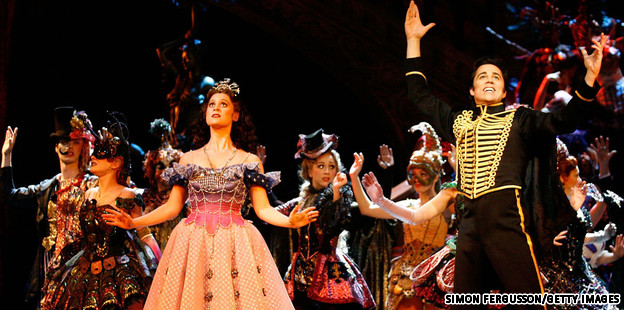
The Eternal Fantasy under the Mask-Ode to the Movie "Phantom of the Opera (2004)"


Directed by Joel Schumacher, the film was also produced and co-written by Lloyd Webber. The Phantom of the Opera stars Gerard Butler in the title role, Emmy Rossum as Christine Daaé, as well as Patrick Wilson, Miranda Richardson, Minnie Driver and Jennifer Ellison.


THE PHANTOM OF THE OPERA: Movie Trailer. Watch more top selected videos about: Emmy Rossum, Gerard Butler

Phantom Of The Opera 2004 Movie Soundtrack from Jason on Vimeo.


Dear the Movie “Phantom of the Opera”


How is it even possible that you were created, you magmum opus? How is it that a masterpiece scenario met the greatest actors and singers of the time and made our dream come true? How could I be so fortunate to have the honor to encounter your magnificence? You are a true miracle. You are a true masterpiece. You are a true fantasy of all musicians and actors and directors and, mostly, of course, the viewers. You are the wonders of history; you are the legacy of the past, the present, and the future. I don’t deserve the desire to demonstrate your beauty or describe your details, but I would definitely delineate that your creation was a gift to mankind. Some would think that I am exaggerating: excessively exalting you by only emphasizing your good characteristics, but there are reasons why I euphorically eulogize my experience of you.


The first time I met one of your family members was at Broadway-did you know? I assume that even you aren’t really sure of who’s in your family tree and who’s not, since it has grown so big: from on-stage musicals to books, dramas, songs, and finally to you (movies). My first encounter with your gigantic family happened last year during the Vision Trip, with your great-great grandfather(musical). (Yes, the one who is the origin of your humongous family, the one who lies at the apex of the tree, and the one who’s now had been alive for several hundreds of years-that is who I am referring to.) I know, it’s a bit too late for someone who would like to claim that he possesses at least a sense of artistic appreciation; it’s embarrassing, I admit that. However, to tell you the truth, I was reluctant to further acquaint with anybody of your kind; I realize now that it’s foolish to make a hasty generalization of a whole species when I’d only met few of the members, but frankly, CATS was too unsatisfactory, too uninspiring, and too unimpressive! In fact, since CATS had disappointed me far too much before, I was expecting utter disappointment from your ancestor, too; my apologies.


However, instead, I found myself completely moved after watching the show. Your grandpa was my life-changing experience that inspired, uplifted, and enlightened my benighted heart. I felt utmost pleasure at the fantastic performance-the performers’ capacity to seize me and freely control my emotions at their will. I felt joy when the musical was joyous; I felt sorrow when the musical was to be sorrowful. All in all, I was fascinated by this new experience; your predecessor’s categorical charm chained me within his grasp, and I couldn’t break free from his lingering imagery even after many days had passed. They had completely “captured” me: the acts, the scenes, the songs-yes, the songs-left so much of an impression that my desire to feel the pleasure once again became so great.
When I had returned to Korea, my lust to experience the artistic ecstasy that I did with your grandfather once more had grown so large that I began “googling” your family history. Ah, and glory to the marvels of technology! After repeatedly failed attempts, I finally succeeded in acquiring you! We were meant to be, my dear, for I am downright positive that our destiny was pre-destined to overlap. Just when I was about to give up, over all the fabricated files and fragmented songs, I coincidentally discovered you-alas, it was serendipity! You wouldn't imagine how delighted I was when I had finally found you at the end of my long conquest.


And soon after, I clicked on your icon twice-the gateway that connected me with you, and I began watching you “perform” with my pounding heart. Do you remember how silent I was? Do you remember my astonished face, fascinated in awe when suddenly the chandelier illuminated and you played your theme song “Phantom of the Opera?” Boy, I was surely surprised back then; you were really something. I mean, I already presumed that you would be “something” since your origins themselves are noble to begin with, but what was truly amazing was that you were “something more” than even the show in Broadway. Your casting was perfect, your presentation was wonderful, your organization was splendid, your illustration was impressive, your transition was brilliant, your songs were unbelievable, your pace was marvelous, your powers were powerful, and you-were-impressive. My, my, am I making you too nervous? I hope you don’t interpret my exaltation as an attempt to flatter you. I was honestly, genuinely, touched-at-the heart by you; I can even now draw pictures of Christine Daae singing “Angel of Music” and “Think of me” or the Phantom singing the “Phantom of the Opera” and “Music of the Night” in my head. And when the songs were sung as a duo or a chorus, they were even better. The harmonious ensemble constituted of countless beautiful voices perpetually resonated in my heart. However, you couldn’t have become a living legend only because of the songs you sung; the way you delivered them, through sincerely immersed emotions and entangling them with a sad scenario, was another contributing factor to your everlasting fame in everyone’s minds-my mind. Your every line, every verse reflected ardent emotions, encompassing affection, care, fear, hatred, sorrow, yearning, disgust, haughtiness, and a variety of others. And due to such vivid portrayals of the feelings of characters, each and every one of the characters seemed “alive”; they each seemed to have possessed their own uniqueness, or conspicuous characteristics, which created liveliness and authenticity. Such verisimilitude is vital to absorb the audience, and that is what you contained to differentiate yourself from your rivals.


I could easily empathize with the Phantom’s grief, sorrow, fury, jealousy, distorted passion, desire to possess, twisted love; I was in Daae’s shoes when she felt the desire to meet the Phantom, the desire to become happy, the desire to escape from her fate and ordeals, and the desire to ask for guidance. You kept me focused, and I adore you for that.


However, despite all the aforementioned attractive features, your most valuable quality still remains; that is perpetuity. The fact that you are a movie, not a musical, is what makes you possess a historical value. Unlike the other members of your family, you last forever. I don’t know if I’ll be able to watch the musical “Phantom of the Opera” after 50 years; the show might not be popular enough to attract new viewers and disappear from the theater; even if it survives, the casting and performance would change over time, and we might not be able to feel the same astonishment, the same enthusiasm as we did years before. However, you-you are different. You will remain the same, preserving your glorious and enchanting old self, even if centuries are to pass by. You will maintain your powers forever, and I could rejoice being overwhelmed by your irresistible charms once again.


And this is why I praise you, oh Phantom of the Opera! That is why I chose you, over millions of other options, to dedicate this long ode to. And my admiration is unconditional. I ask of you nothing else than to remain as who you are in my C drive until the day comes we’ll have to part. I revere you, I worship you-you are my idol! I can’t imagine my daily routine without you know, for I will play you over and over again whenever that melody from the “Angel of Music” resounds inside my head. Even now, I am listening to your voice as I’m expressing my devotion towards you.
You are my legend. You are my Angel of Music. You are my guide and guardian (lyrics from the song). Grant to me your glory (also lyrics from the song), and let me resign in ecstasy eternally.


*And you, who is reading this ode; please, do allow yourself the opportunity to experience excessive pleasure-go watch the Phantom of the Opera.

2011년 11월 13일 일요일

Review Over The Excellent (?) Musical "The Last Empress"


Musical "The Last Empress"


The review and evaluation below were produced strictly based on my subjective standards.


Reputation ★★★★★


A masterpiece of an everlasting merit. Performed at Broadway and lauded by the Broadway critics. The pride of Korean musicals. These were the appreciations I had heard of the musical “The Last Empress”. So therefore, these were the similar assessments I was hoping to make myself about the musical when I had visited the Choong-Moo Art Hall with my two friends on the 12th of November, the precious golden peak of my weekend. Unfortunately, the only impression I had received from the 150 minutes of the lengthy performance was how distant the quality of Korean musicals were from reaching the levels of that of globally renowned musicals.

Expectations ★★★★★


At first, everything seemed to go pretty well: after we (me and my friends) had eaten pasta at a nearby famous restaurant which we had “googled” on the internet beforehand, we arrived just in time when the theatre was about to lock its doors. We sat down at the third row from the front, which had cost us fairly a large amount (85,000 won), with our hearts filled with grand expectations and nervous excitements. We were all hoping to see an outstanding show, perhaps not like the historically epoch-making Phantom of the Opera, but at least possessing the grandeur and scale that it ought to have considering its superb price of fame. And until the curtain was finally lifted and several musical performers appeared on stage wearing awkward Japanese samurai costumes, our sense of excitement remained.

Language Transformation ★★


However, when the show had begun, I noticed that something was…… unnatural. Surprisingly, it wasn’t just me who’d felt that way; all three of us simultaneously stirred at the “uncomfortable”-yes, that would be the correct modifier-song the samurais sang. A few seconds later, I finally understood the cause for my uneasiness; the words in Korean were being squashed into the musical rhymes, and it was hard to distinguish whether the performers were singing a song or engaging in a dialogue. It was rather odd; something wasn’t really right, when Korean was being transferred into musical lyrics, the connection wasn’t as smooth when English had. Our stereotypes that musicals should be performed in English might have played a role in generating the uneasy sentiment, but the lack of professional skills make the transition natural was also a definite factor. Somehow, the actors skillfully managed to continue, but even they couldn’t assist us in eliminating the awkward sentiment we felt due to the “forced translation” between two different languages. Such impressions made us feel……exhausted: we felt as if the singers were laboriously reciting their sentences, with great effort and ardor but without confidence.

However, despite our discomfort towards the awkward transformation, the performance continued. Thankfully, after awhile, we managed to withstand the choppy dialogues (or songs) as we eventually got used to them. So then, we quietly watched the show, waiting for the performers to impress us-to sway our emotions dexterously, manipulating us to be surprised, be enraged, be sympathetic, be nostalgic, and be sorrowful so that we had to cry out loud. Our anticipations were still very high; we were so sure that we would soon witness the source of this musical’s popularity.

The first half of the performance had ended.
We still weren’t sure why so many people had exalted this piece.


Content ★★★
Performance ★★★
Impact ★★
Presentation of Scenario ★★
Settings ★★★


The overall quality of the work was reasonable. The scenario was based on a historical event, thus the story pretty much stuck with the facts. The characters, similarly, resembled the actual figures. The singing and dancing were well practiced by the performers-by 대원군, 홍계훈, 미우라, 고종, and 명성황후, we could notice-and was put on stage without critical mistakes. Conclusively, the general content of the show had well reflected the historical incident to some degree, and the “artistic elements” of the show (singing and dancing) delivered the scenario reasonably. However, as you might have noticed from the tone of my demonstration, everything was reasonable; there wasn’t a single part in the piece where it was strikingly impressive or a single song which was euphonious and beautiful for us to remember forever. Nothing was resonating in our mind when the first half had ended.

Emotional Absorption ★


So, we expected for all the surprises and sensations in the next half. We at least had hoped to hear the historically famous quote “I am the mother of this nation” at the climax, when the empress was murdered.

Disappointingly, our poor empress encountered her tragic fate abruptly, and passed away without much drama.
The latter part had finished.


And we were just all so confused! We were thinking, “Did we miss something?” “Why is it already over?” “THAT’S IT?”We were mad, we were disappointed, and again, we were confused over what was supposed to be so impressive about what we'd just watched. The first thought that came into my mind as I was walking out of the theater: “That show is so mediocre!” The show wasn’t terrible, but it wasn’t good either! And, of course, it wasn’t impressively fantastic, at least not enough for it to be named the “A masterpiece of an everlasting merit” or “The pride of Korean musicals.” Where did these evaluations even come from? Where were all the lauded drama and the excessive flow of emotions-the fury, the sorrow, the empathy-that the critics of Broadway had experienced?


As we were exiting through the door, we heard someone say, “I enjoyed the show, but I couldn’t find a reason to revere it. I mean, I couldn’t find something specifically to criticize, but I couldn’t find something to craze about either.”

Mediocrity ★★★★★
Disappointment ★★★★


And that’s exactly my point.

Cost-Benefit Analysis ★★★


Did I tell you that this show cost me 85$? Well, luckily, I don’t regret spending the money. Although I did waste a crucial part of my weekend along with my month’s allowance, I could say that I paid off the performers who must have practiced really hard for this show, and who exactly aren't responsible for the banality and idleness of the show. And it didn’t suck, either, so, I’ll consider it to be the one and only annual investment I’ll make for my cultural life. Besides, I also learned two important lessons from this experience. Number one: don’t blindly trust the reputation, even if authorities with expertise had given them so; sometimes, you just can’t understand their standards. And number two: Korean musicals still have a long way to go in their path.

And my advice for you: don’t go watch “The Last Empress.”

Satisfaction ★★
My Recommendation ★


Part of the Musical that are interesting to watch:
http://www.pandora.tv/category.ptv/video/category/c1/01/c2/0097/ch_userid/barrim/prgid/34270579 "수태굿"

Music Video from Another Movie:
http://blog.naver.com/axisinc?Redirect=Log&logNo=30113366398&jumpingVid=F81A318F57E386813FB85508428F425CE66C